
KENSINGTON · ROOFLIGHT REPLACEMENT
Rooflight Replacement in Kensington, London
Replacing a failed pressure-cap rooflight with structural silicone joints and a more suitable heat-strengthened laminated inner pane.
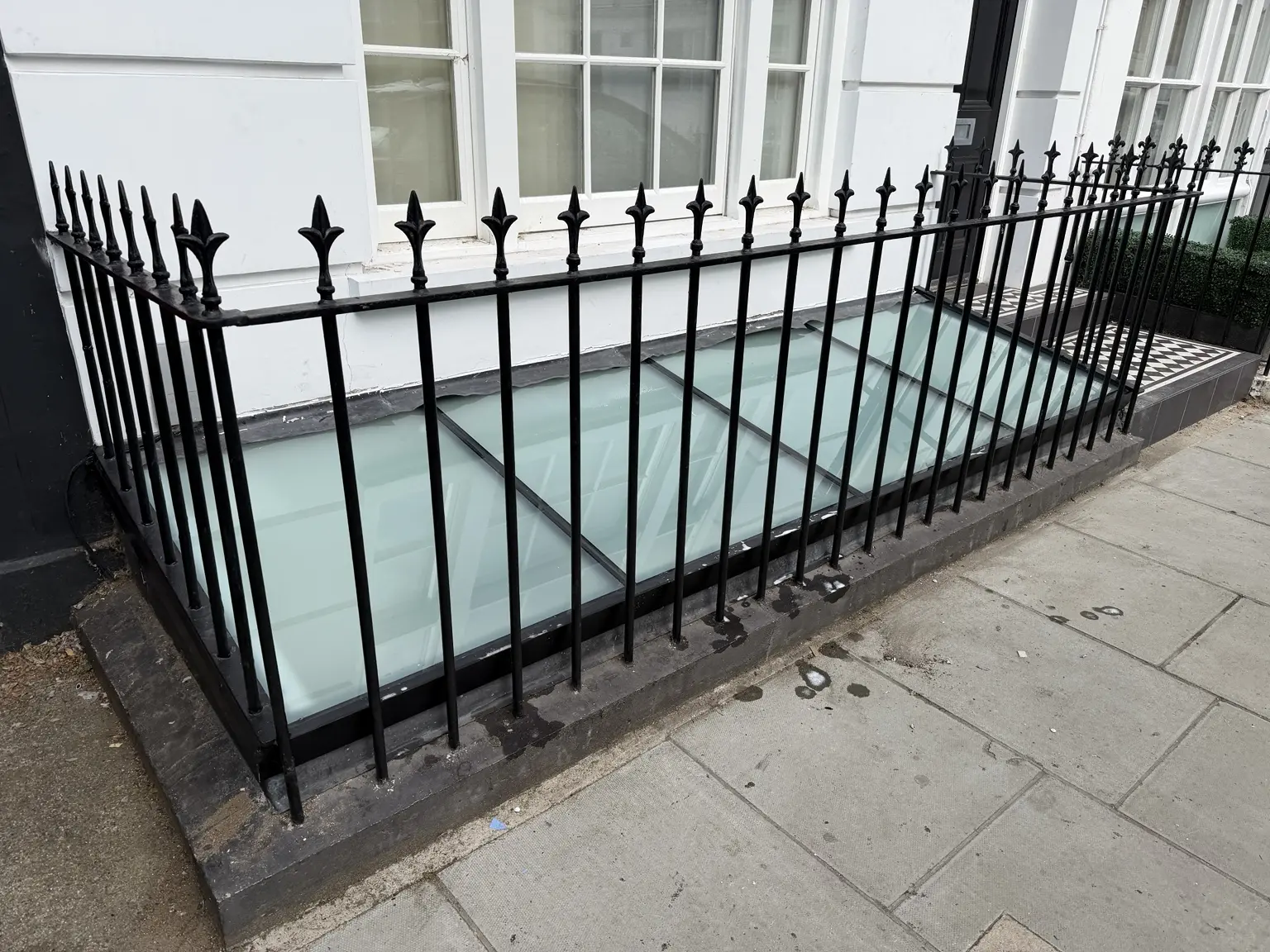
This lower-ground rooflight in Kensington had an old multi-panel pressure-cap system. The annealed laminated inner glass had broken, with the damage consistent with thermal stress. The replacement needed to improve the glass specification while respecting the existing opening, railings and period frontage.
Why the original rooflight needed replacement
The existing rooflight used metal pressure caps between the glass panels. One of the annealed laminated inner panes had cracked following thermal stress.
Lamination helps retain broken glass, but it does not make an annealed pane resistant to every thermal condition. Local temperature differences, shading, edge condition and the way the glass is supported can all contribute to thermal stress.
Careful removal within a constrained London frontage
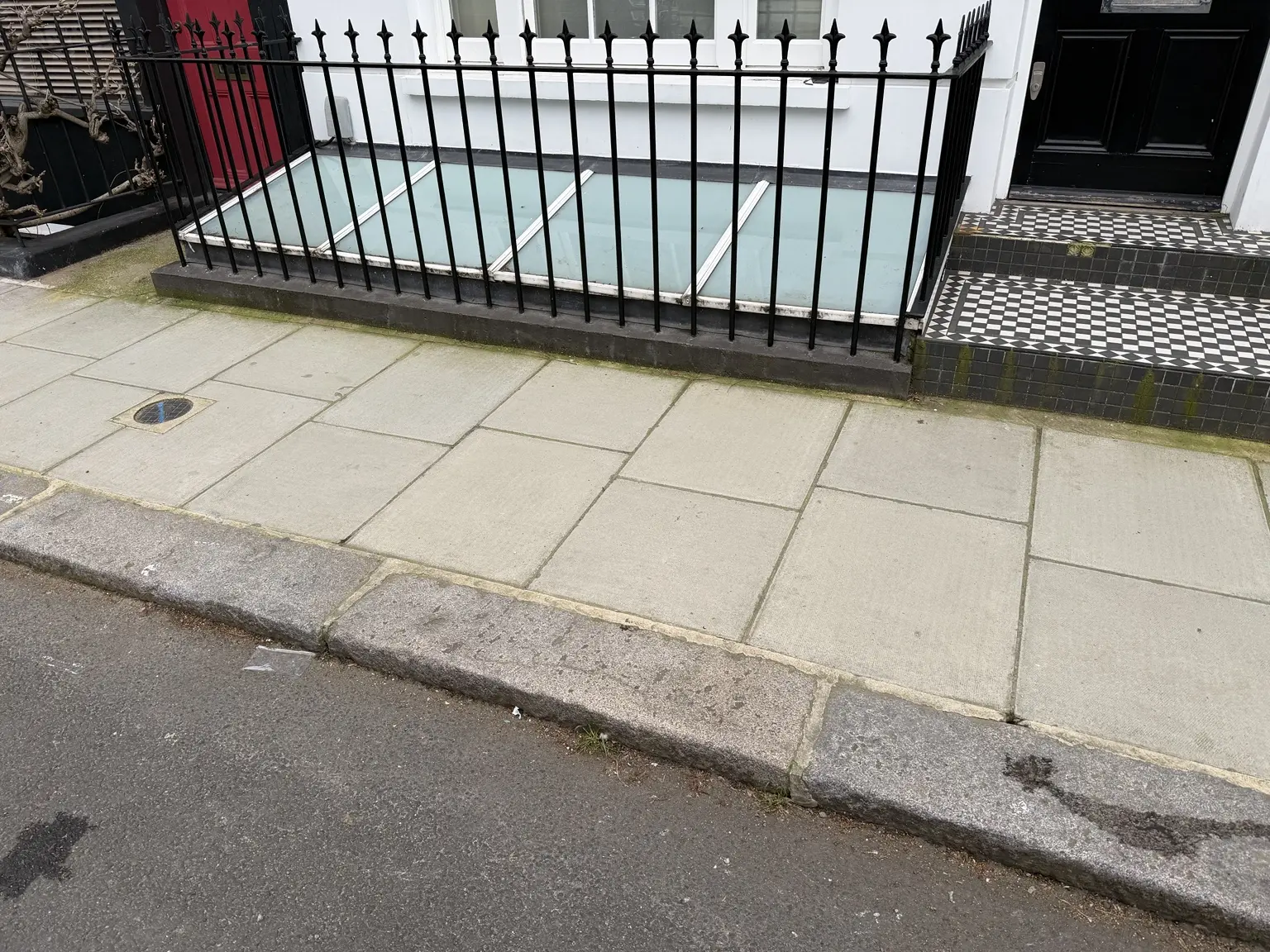
The rooflight sits behind existing railings at pavement level, immediately beside the entrance. The work area had to remain controlled and protected throughout removal.
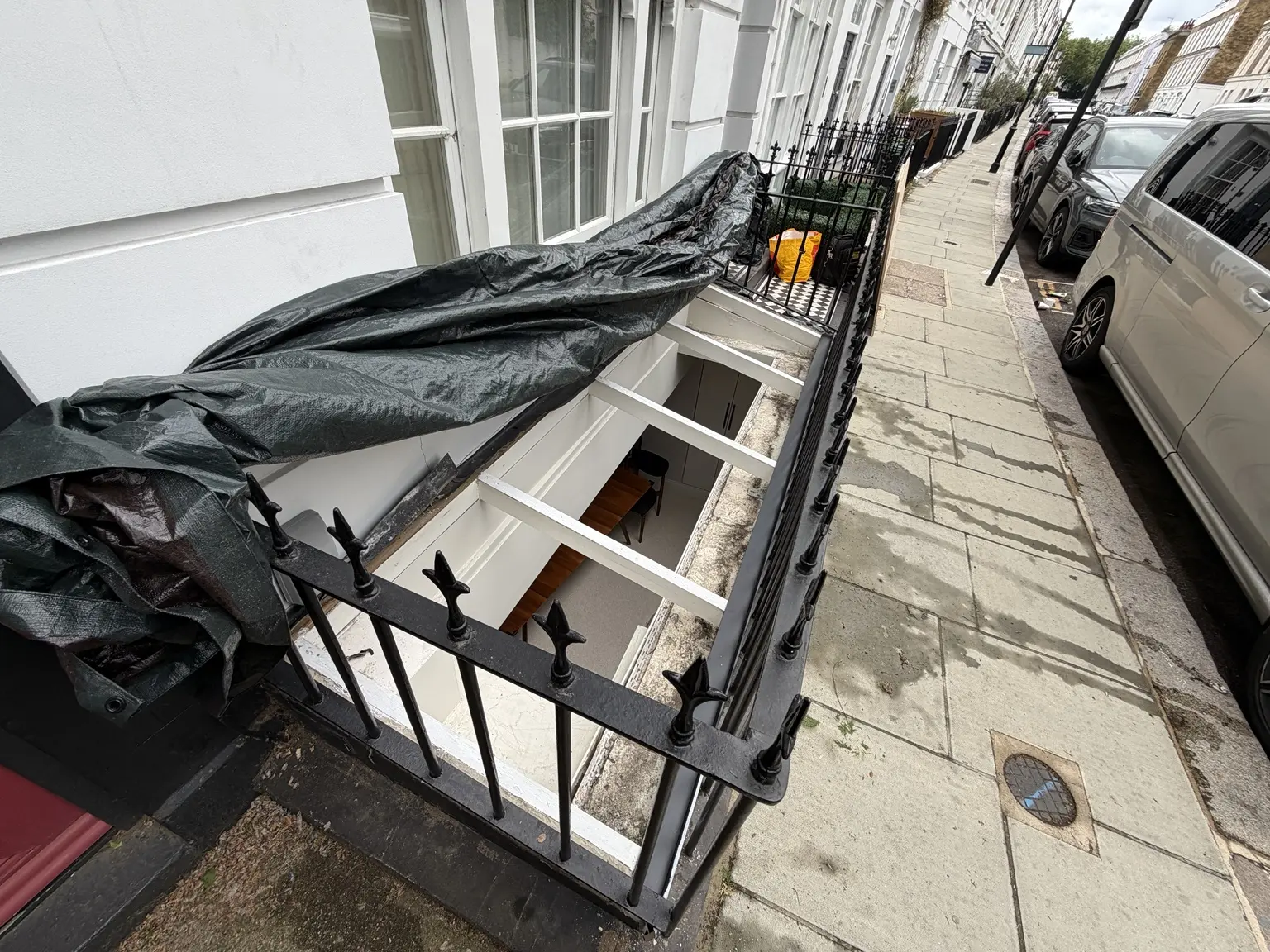
After the old glass and caps were taken out, the supporting opening was exposed for inspection and preparation. Accurate checks at this stage were essential because the new glazing had to suit the retained structure.
Upgrading the inner glass specification
The replacement used heat-strengthened laminated inner glass instead of the original annealed laminate. Heat-strengthening increases resistance to thermal stress while the laminate continues to provide fragment retention for overhead safety.
The complete build-up was selected for the actual rooflight arrangement. Glass type, edge quality, support, coatings and local exposure all need to be considered together rather than relying on the word laminated alone.
Replacing pressure caps with structural silicone joints
The old intermediate pressure caps were replaced with slim structural silicone joints between the insulated glass units. This reduced the amount of visible metal and produced a cleaner continuous glazed appearance.
A silicone-jointed system still requires controlled joint dimensions, compatible materials, suitable glass support and careful weather sealing. It is a designed glazing detail, not simply sealant applied between panes.
What this replacement achieved
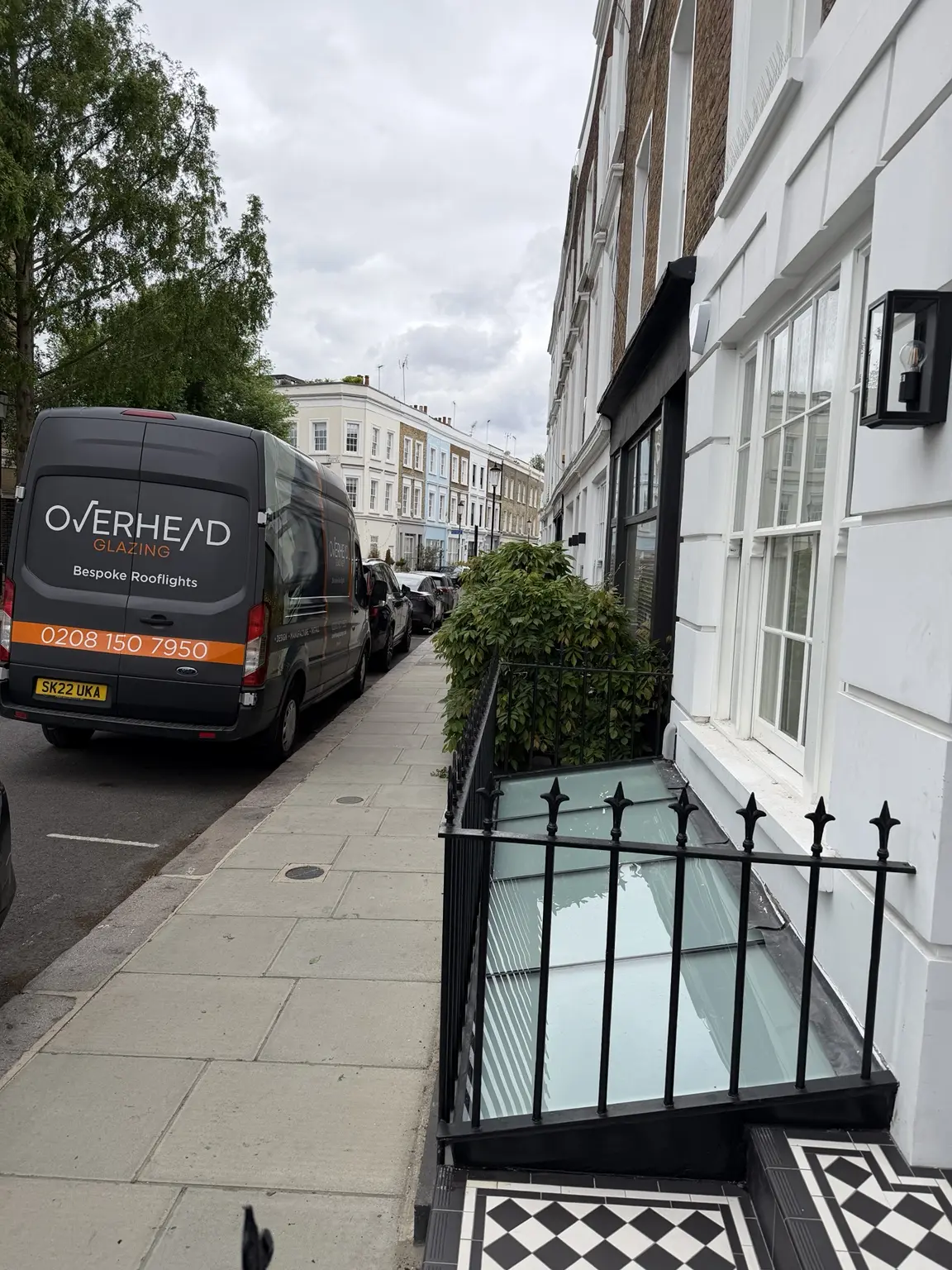
The finished rooflight retains the original long pavement-level opening while improving the glass specification and simplifying the external sightlines.
For property owners considering rooflight replacement in London, the first step is to identify why the existing system failed. The new glass and joint design should respond to that cause rather than simply copying the original construction.