
Applications
Flat rooflights, glass roofs and links
HEAT-REDUCING GLASS FOR ROOFLIGHTS
High-performance solar control glass for flat rooflights, glass roofs and replacement glazing—selected to reduce unwanted solar heat while preserving useful daylight.
AT A GLANCE
Flat rooflights, glass roofs and links
New build, renovation and replacement
Typical g-values 0.35 to 0.29
Double or triple glazed IGUs
Heat-treated laminated safety glass
Heat-soak tested as standard
CLEAR DETAILS. EASY CHOICES.
Product information, installation
and documents in one place.
Roof glazing receives direct sun for long periods, so a large or south- and west-facing rooflight can introduce much more solar heat than a smaller vertical window. Solar control roof glass uses a selective coating to reduce the proportion of solar energy entering the room while retaining a bright, relatively neutral appearance.
We specify the coating as part of the complete insulated glass unit. Orientation, glazed area, room use, ventilation, shading, glass colour and the required U-value are reviewed together—because the lowest g-value is not automatically the best result for every home.
Quoted performance must relate to the final insulating glass make-up. Pane thickness, lamination, cavity, coating position and triple glazing can change both g-value and visible light transmission.
A balanced option with approximately 70% visible light transmission and a 0.35 g-value in Guardian's published reference double-glazed unit.
Stronger solar control with approximately 60% visible light transmission and a 0.29 g-value in Guardian's published reference double-glazed unit.
A highly selective triple-silver coating with 61% light transmission and a 0.29 g-value in Saint-Gobain's published 6-16-4 reference unit.
Where brand availability changes, we can specify the required g-value, light transmission, appearance, heat treatment and laminated safety build-up rather than relying on a product name alone.
Supply-only is available for suitable fixed flat rooflights. Our specialist systems are supplied with installation by Overhead Glazing; replacement-glass work is assessed individually.
Provide sizes, photographs or drawings, postcode, room use and whether the glazing is new or a replacement.
We consider orientation, total glazed area, shading, ventilation and the overheating concern.
The coating, safety glass, cavity and double- or triple-glazed unit are checked as one specification.
Drawings and performance information are agreed before the bespoke roof glass is produced and fitted.
The roof structure, prepared upstand, waterproofing, lifting and access responsibilities are agreed with your project team before work begins.
YOUR PROJECT PRICE
Based on the glass, dimensions and agreed service.
LEAD TIME
Programme confirmed after specification and drawing review.
BEFORE MANUFACTURE
Ask us to check the opening and installation dimensions.
OUR SPECIALIST TEAM
Fitting, access and lifting requirements agreed with your project team.
Final cost and programme are confirmed for your specification and agreed scope.
THE DETAIL, FROM EVERY ANGLE
Select a photograph
to look closer.
OVERHEAD GLAZING IN MOTION
THE DETAIL MAKES THE DIFFERENCE
High-selectivity coatings are designed to admit a useful level of visible light while restricting a greater proportion of solar energy. This is particularly valuable over kitchens, living spaces and large glazed extensions.
PERFORMANCE WITH CONTEXT
Glass, frame, support and intended use are considered together.
Compare insulation, weight, solar control and the complete rooflight specification before choosing the number of panes.
The final g-value and light transmission are calculated for the selected outer pane, cavity, laminated inner pane and double- or triple-glazed build-up.
We check the existing frame, kerb, sealed-unit thickness, edge support, drainage and access before recommending a solar-control rooflight replacement.
Quoted performance must relate to the final insulating glass make-up. Pane thickness, lamination, cavity, coating position and triple glazing can change both g-value and visible light transmission.
A lower g-value means less total solar energy passes through the glazing. The figures below are useful reference points, but the rooflight quotation will state the performance of the actual proposed build-up.
Manufacturer figures shown for their published reference double-glazed units: Guardian 6 mm coated glass / 16 mm 90% argon cavity / 4 mm clear glass; Saint-Gobain 6-16-4. The ≈0.47 low-E figure is an illustrative benchmark, not a universal product value. Our overhead safety units normally include a laminated inner pane, so the final calculated values will differ.
Solar control reduces heat entering the building and can improve summer comfort. Thermal fracture is caused by temperature differences within a pane, often influenced by edge condition, partial shading and glass absorption. Heat-treated glass and a project-specific thermal-safety check address that risk. Spontaneous breakage associated with nickel-sulphide inclusions is a different mechanism again.
BEFORE YOU CHOOSE
The g-value, or solar factor, is the proportion of total solar energy transmitted through the glazing. A value of 0.29 admits less solar energy than 0.35 or 0.47, but the final selection must also consider daylight, colour, winter gains, room use and ventilation.
It provides stronger solar-heat reduction in comparable units, but it is not automatically the best choice. A 0.35 product can retain more visible light and may be a better balance for some rooflights.
Modern high-selectivity coatings can look comparatively neutral, but every product has its own colour and reflection. Samples and the complete glass make-up should be reviewed where appearance is critical.
Often, yes. We first need to confirm the existing sealed-unit size and thickness, frame condition, edge support, drainage, access and whether the frame can accept the proposed replacement unit.
Both are possible. Double glazing can provide strong solar control with lower weight; triple glazing may improve insulation but changes weight, light transmission and the calculated solar factor.
No single coating can guarantee that glass will not break. Solar control addresses heat entering the room. Thermal-stress risk is assessed separately through glass type, heat treatment, edge quality, shading and the complete glazing detail.
Solar control does not replace overhead safety design. We specify a laminated inner pane so broken fragments are retained, with the exact build-up selected for the rooflight size and loading.
Send the approximate outside kerb size, postcode, photos or drawings, room use, orientation if known, and whether this is a new rooflight or replacement glass.
Qualifying insulating glass units carry a 10-year seal warranty, subject to the written terms supplied with the order. This is not a blanket guarantee against breakage or a 10-year frame or installation warranty. Installation labour carried out by us is covered for five years, subject to the written terms.
CUSTOMER FEEDBACK
Read feedback about Overhead Glazing on Google.
Share your postcode, drawings and project details. We’ll help confirm a suitable specification.
We’ll use these details to respond to your enquiry. Privacy policy
Your enquiry goes straight to our team.
PROJECTS & PRACTICAL ADVICE
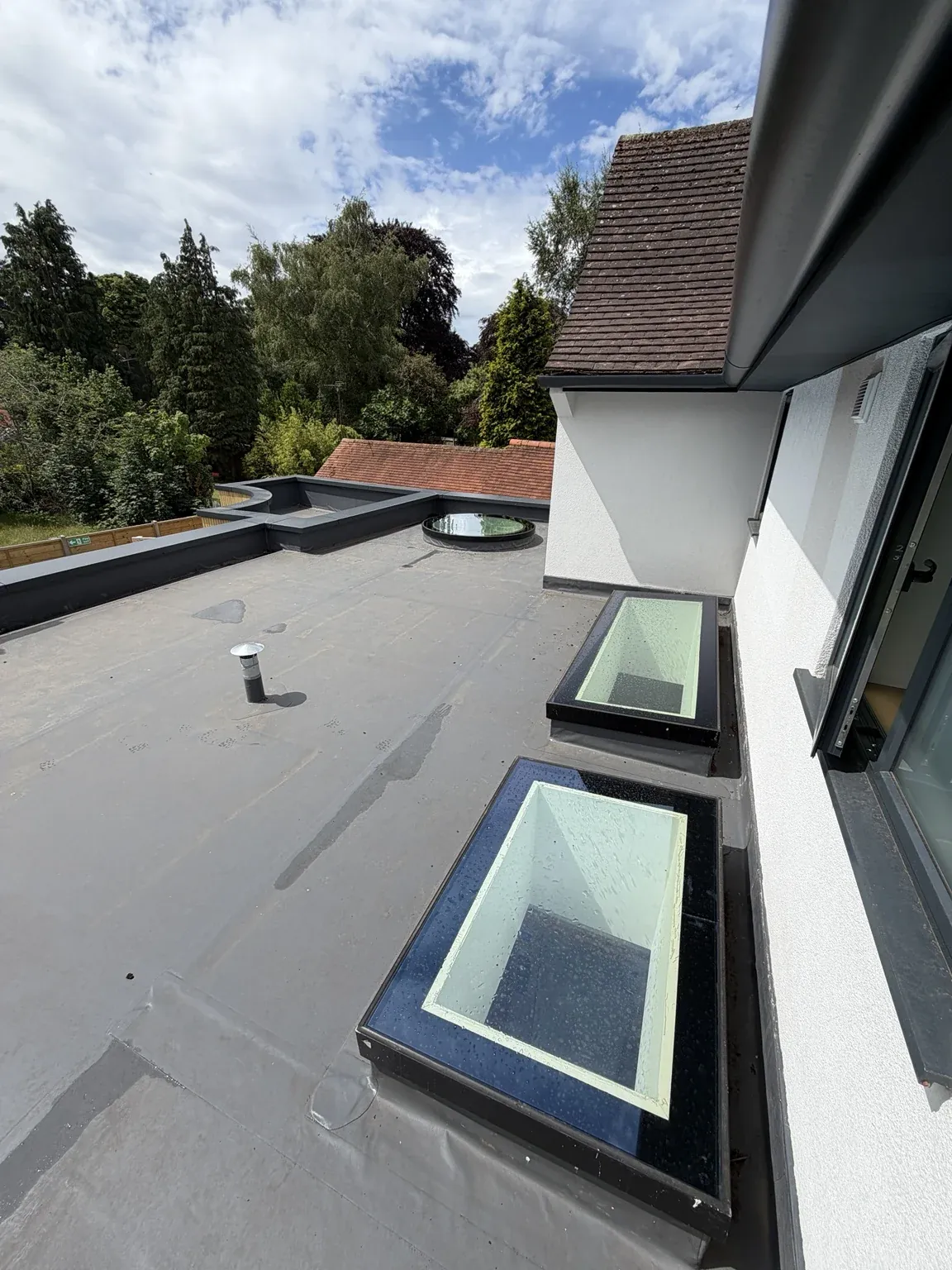
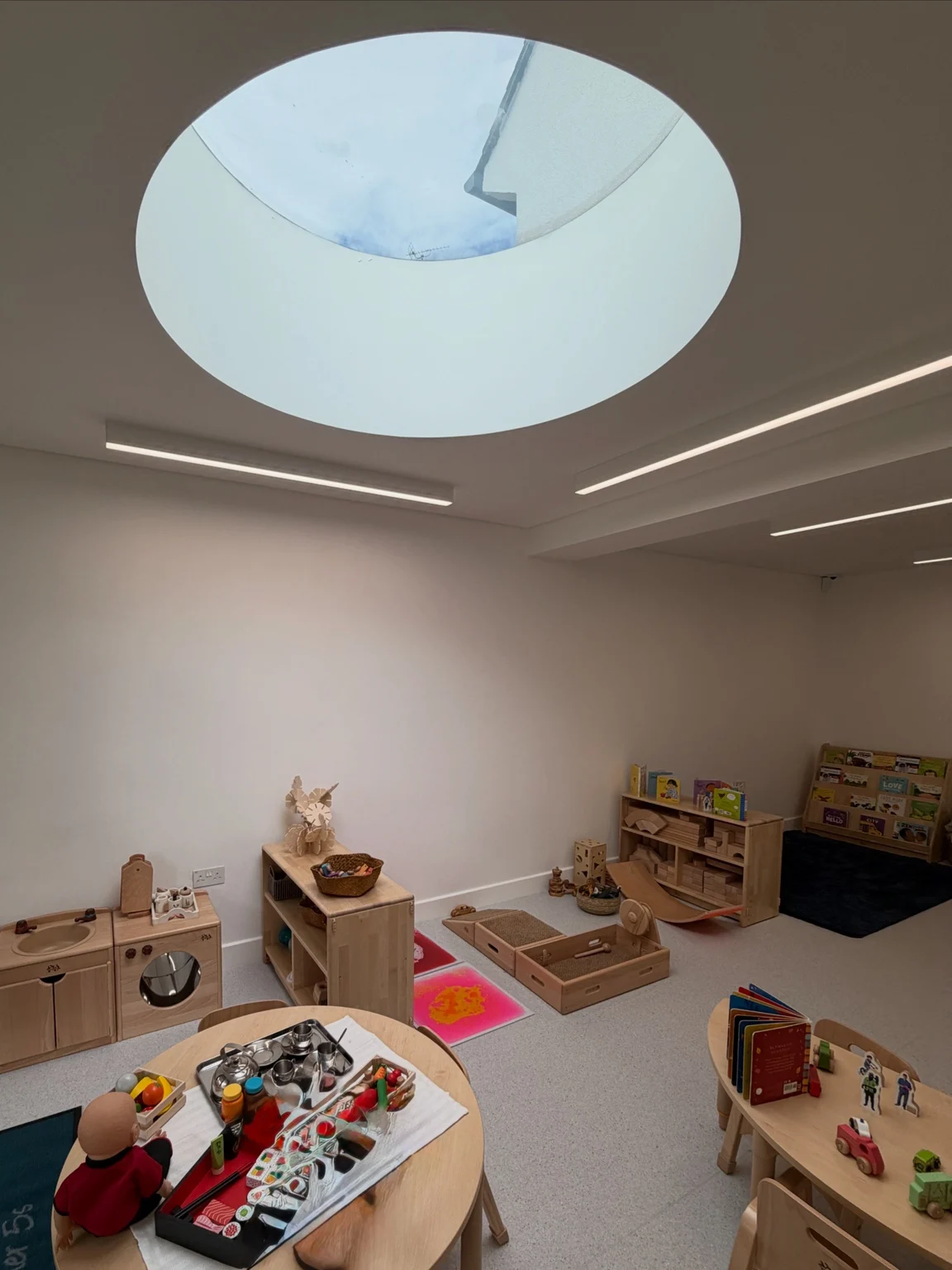
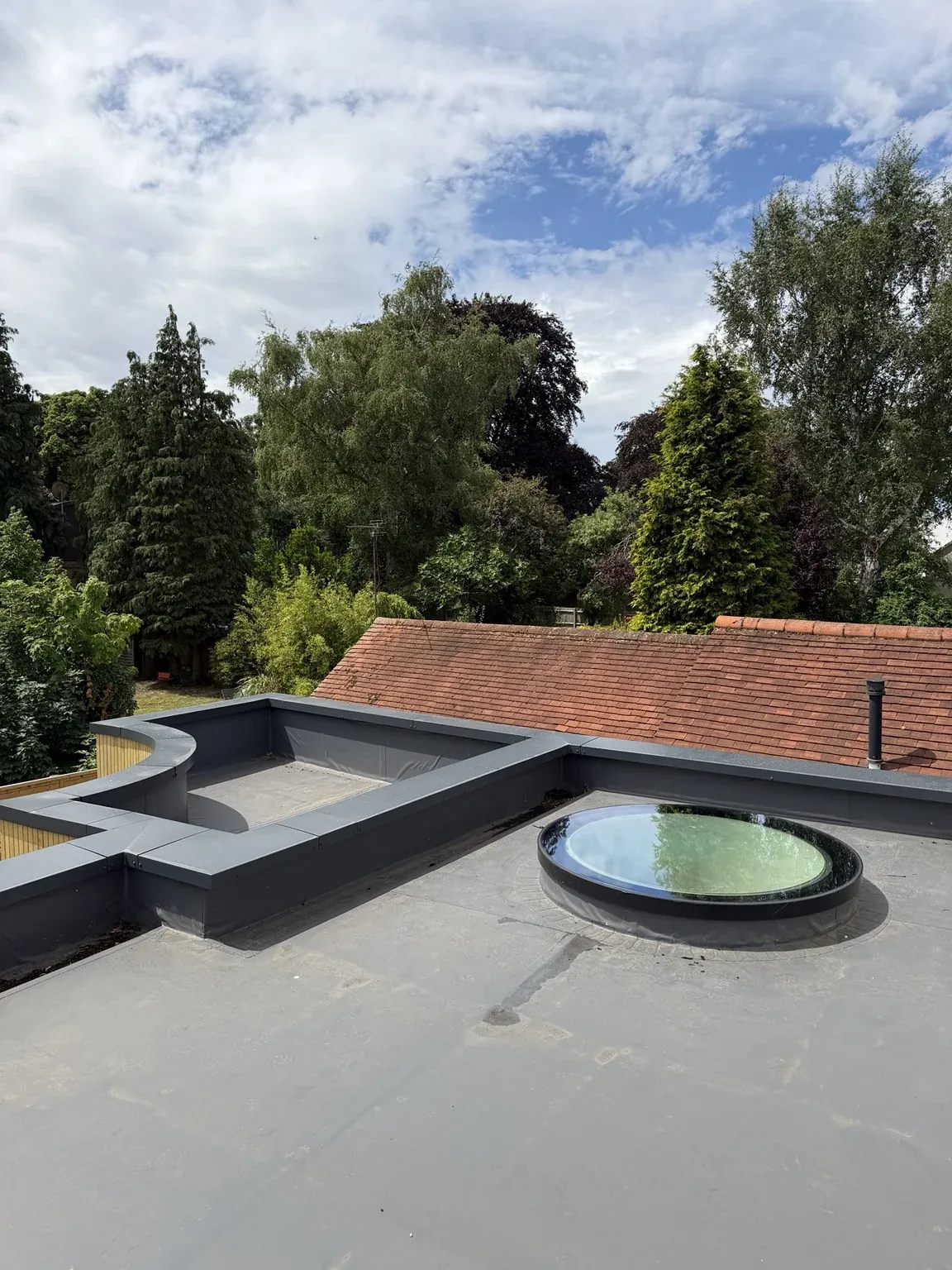
Three rectangular rooflights and two circular units were specified with Guardian SN70/35 solar-control glazing for this nursery renovation. The case study explains the daylight brief and crane installation.